
2025’s Apex Predators: Unveiling the Pinnacle of Automotive Velocity
The relentless pursuit of raw speed has always been the heartbeat of automotive innovation. From the moment the Ferrari F40 first shattered the 200 mph barrier in 1987, a new benchmark was set, igniting a global obsession with achieving unprecedented velocities. The ensuing decades witnessed a fierce, often breathtaking, competition among titans of the automotive world – Bugatti, Koenigsegg, and Hennessey – each striving for ultimate speed bragging rights. By 2019, the Bugatti Chiron Super Sport etched its name in history, clocking a remarkable 304.7 mph. As we navigate through 2025, the landscape of hypercar performance continues to evolve at an astonishing pace, with emerging marques and established legends pushing the boundaries of what’s technologically feasible.
For a decade, I’ve been immersed in the exhilarating world of high-performance automobiles, witnessing firsthand the groundbreaking engineering and unwavering ambition that drives these incredible machines. This year’s compilation of the fastest cars in the world reflects not just raw power, but also the sophisticated application of aerodynamics, advanced powertrain technologies, and a relentless focus on chassis dynamics. While the quest for the absolute top speed remains a captivating spectacle, the true advancement lies in the democratization of performance, making hypercar capabilities more accessible and, dare I say, more thrilling than ever before.
Our assessment for 2025 is meticulously curated, focusing solely on verified or credibly claimed top speeds, with a minimum threshold of 218 mph. Unproven manufacturer claims are clearly indicated, ensuring our list remains a testament to tangible achievements. This isn’t merely a ranking; it’s an exploration of the engineering marvels that redefine automotive excellence and inspire awe in every gearhead.
The Constellation of Speed: Charting the Fastest Production Cars of 2025
The pinnacle of automotive performance is a constantly shifting target, a testament to human ingenuity and an unyielding desire to conquer the limits of physics. As a seasoned observer of this dynamic arena, I can attest that the machines gracing this list are more than just vehicles; they are rolling testaments to decades of research, development, and a touch of automotive artistry.
Porsche 918 Spyder — 218 MPH
While Porsche’s official figures for the 918 Spyder hovered around 214 mph, real-world evaluations in 2018 revealed its true mettle, pushing the needle to an impressive 218.4 mph. This hybrid marvel, still the Stuttgart marque’s fastest production car to date, combines a naturally aspirated 4.6-liter V-8 engine producing 599 horsepower with a potent electric duo adding 282 hp, culminating in a formidable 875 hp and a staggering 944 ft-lbs of torque. Its ability to seamlessly blend electric efficiency with visceral V-8 power cemented its legacy.
Aston Martin One-77 — 220 MPH
A true collector’s dream, the Aston Martin One-77 was a limited-edition masterpiece, with only 77 units ever produced. Its heart was a colossal 7.3-liter V-12 engine, sourced from Cosworth, unleashing 750 hp and 553 ft-lbs of torque. This potent combination, housed within an exquisite aluminum and carbon-fiber chassis, propelled the One-77 from 0 to 60 mph in a brisk 3.5 seconds. Aston Martin’s own rigorous testing confirmed its capability to reach a remarkable 220 mph.
Lamborghini Aventador LP 780-4 Ultimae — 221 MPH
As the final iteration of Lamborghini’s legendary Aventador lineage, the Ultimae represents the zenith of naturally aspirated V-12 performance before the brand’s inevitable embrace of electrification. This final edition, boasting a mighty 6.5-liter V-12, delivers a formidable 769 hp and 531 ft-lbs of torque, a significant leap from its predecessors. Despite its slightly more restrained (by Lamborghini standards) aerodynamic profile compared to the track-focused SVJ, the Ultimae retains all-wheel drive and a robust powertrain, achieving 0-60 mph in a blistering 2.8 seconds, en route to its 221 mph top speed. The Ultimae stands as a poignant farewell to an era of pure internal combustion exhilaration from the Raging Bull.
Gordon Murray Automotive T.50 — 230 MPH (Claimed)
The automotive world rightly holds Gordon Murray in reverence, the visionary designer behind the iconic McLaren F1. His eponymous marque, Gordon Murray Automotive, carries forward his philosophy of lightweight construction and driver-centric engineering with the T.50. Powered by a Cosworth-developed 4.0-liter V-12, this featherweight marvel (weighing just 2,174 pounds) produces 654 hp and revs to an astonishing 12,100 rpm. Murray’s bold claim of a 230 mph top speed is supported by innovative aerodynamic solutions, including a ground-effect fan, a testament to his enduring genius.

Pagani Huayra — 238 MPH
Horacio Pagani, a maestro of automotive art, introduced the Huayra as the successor to the legendary Zonda. Named after Huayra-tata, the Quechua god of wind, this machine embodies aerodynamic fluidity and raw power. Its heart is a twin-turbocharged Mercedes-AMG V-12, generating a formidable 720 hp. Mated to a seven-speed single-clutch gearbox that delivers exhilarating, albeit dramatic, shifts, the Huayra dispatches 0-60 mph in a mere 2.8 seconds, hinting at its substantial top-end capability.
Pagani Huayra BC Roadster — 240 MPH (Estimated)
The “BC” in the Huayra BC Roadster pays homage to Benny Caiola, an early and influential patron of Horacio Pagani. This open-top variant, launched in 2019, was conceived from customer demand for an even more aggressive iteration of the Huayra Roadster. Featuring a further enhanced Mercedes-AMG twin-turbo V-12, outputting a staggering 791 hp, this $3.5 million hypercar is estimated to reach a breathtaking 240 mph, combining open-air exhilaration with extreme performance.
McLaren F1 — 240.1 MPH
The McLaren F1 remains an undisputed legend, a benchmark set by Gordon Murray’s unparalleled vision. Launched in 1993, it was the first production car to feature a carbon-fiber monocoque and a BMW-sourced 6.1-liter V-12 engine, producing 618 hp. Its performance figures were, and still are, astonishing: 0-60 mph in 3.2 seconds and 0-100 mph in just 6.3 seconds. In 1998, the F1 officially claimed the world speed record at 240.1 mph, a record that stood for seven years. Its influence on the supercar landscape is immeasurable.
Saleen S7 Twin Turbo — 248 MPH
Steve Saleen’s ambition was clear: to create an American supercar capable of challenging the world’s best. The Saleen S7 Twin Turbo was the realization of that dream. This meticulously hand-built, mid-engined machine, one of the first of its kind from the US, housed a heavily modified 7.0-liter twin-turbo Ford Windsor V-8 engine, delivering a potent 750 hp. Its striking design and formidable power made it a serious contender in the supercar realm.
Koenigsegg CCXR — 249 MPH
Koenigsegg, a Swedish marque synonymous with extreme performance, introduced the CCXR with a revolutionary twist. Utilizing the same 4.7-liter twin-turbo V-8 as the CCX, the CCXR was specifically engineered to run on E85 biofuel. This adaptation dramatically boosted its power output from 795 hp to an astonishing 1,004 hp, placing it firmly in the four-figure horsepower club. Combined with enhanced aerodynamics, the CCXR promised blistering straight-line speed.
Koenigsegg Gemera — 249 MPH (Claimed)
Christian von Koenigsegg describes the Gemera as a “mega GT,” a designation that perfectly encapsulates its unique blend of practicality and hypercar performance. This four-seater marvel boasts an astounding 1,700 hp and 2,581 ft-lbs of torque. Its acceleration is nothing short of brutal, achieving 0-60 mph in an unbelievable 1.9 seconds, faster than the blink of an eye. The Gemera redefines what’s possible in a grand tourer, offering genuine supercar thrills for four occupants.
Tesla Roadster — 250+ MPH (Claimed)
Elon Musk’s vision for the Tesla Roadster represents a spiritual return to the company’s coupe origins, but with an electrifying infusion of performance. Tesla claims this all-electric hypercar, powered by a massive 200 kWh battery pack offering up to 620 miles of range, will achieve 0-60 mph in a mind-bending 1.9 seconds. With its trio of electric motors, the Roadster is projected to surpass 250 mph, making it a formidable force in the electric hypercar segment and a significant disruptor in the high-performance vehicle market.
Aston Martin Valkyrie — 250 MPH (Claimed)
The collaboration between Aston Martin and Red Bull Racing’s Formula 1 design wizards gave birth to the breathtaking Aston Martin Valkyrie. Known during development as the AM-RB 001, this hypercar is a visual and aerodynamic masterpiece. Its Cosworth-developed 6.5-liter V-12 engine produces an astonishing 1,160 hp, providing immense power for its 2.3-second sprint to 60 mph. The Valkyrie represents a fusion of cutting-edge automotive and motorsport engineering.
McLaren Speedtail — 250 MPH
The McLaren Speedtail continues the legacy of extreme speed pioneered by the F1, but with a modern, hybrid-powered approach. This rear-wheel-drive hypercar combines its hybrid system to produce 1,035 hp. Its incredibly sleek and aerodynamic silhouette, coupled with a lightweight carbon-fiber construction, is precisely engineered for its blistering 250 mph top speed. McLaren’s claim of reaching 186 mph in just 12.8 seconds underscores the Speedtail’s remarkable aerodynamic efficiency and straight-line prowess.
Czinger 21C V Max — 253 MPH (Claimed)
Czinger Vehicles, an American hypercar startup, is at the vanguard of automotive innovation, championing the integration of 3D printing and AI-assisted design in mass production. The 21C, a groundbreaking 1+1 hypercar, has already set lap records at prestigious tracks like WeatherTech Raceway Laguna Seca and Circuit of the Americas. The V Max variant, unveiled in 2022, features a more elongated and aerodynamically optimized body, reducing drag. It pairs a twin-turbocharged 2.88-liter V-8 with dual electric motors, delivering a combined 1,250 hp to all four wheels. With a remarkably low dry weight of 2,756 pounds, Czinger claims the V Max can achieve 0-60 mph in under 1.9 seconds and reach a top speed of 253 mph. This represents a bold leap forward in sustainable hypercar manufacturing.
SSC Ultimate Aero TT — 256.1 MPH
The 2007 SSC Ultimate Aero TT holds a significant place in automotive history, having been verified by the Guinness Book of Records with a top speed of 256.18 mph. While this record has since been surpassed, the Ultimate Aero TT remains an engineering marvel. Constructed entirely from carbon fiber, its twin-turbocharged Corvette C5R V-8 engine was tuned to produce over 1,100 hp and 1,094 ft-lbs of torque, enabling a 0-60 mph sprint in just 2.7 seconds. Its integration of dual rear air brakes further highlights its track-inspired performance capabilities.
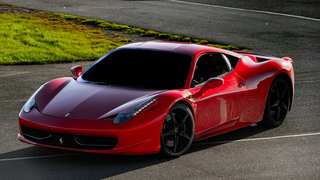
Rimac Nevera — 258 MPH
Mate Rimac, at just 33 years old, has engineered a hypercar that redefines electric performance: the Rimac Nevera. With twice the power of a Formula 1 car and the ability to reach 60 mph in under two seconds, the Nevera is an intimidating force. Yet, Rimac’s vision was to create a highly usable, no-fuss grand tourer, a duality it achieves with astonishing success. The 1,914 hp Nevera is currently the world’s fastest-accelerating production car. Its electric powertrain emits a symphony of high-voltage energy, creating a dramatically engaging driving experience that sets it apart from conventional EVs and justifies its significant price tag.
Bugatti Mistral — 261 MPH (Claimed, Roof Off)
Bugatti, a marque synonymous with extreme speed, continues its legacy with the Mistral roadster. This striking machine represents the final iteration of Bugatti’s legendary quad-turbo W-16 engine before the brand’s transition towards hybridization and electrification under Rimac’s ownership. The Mistral required extensive design revisions to optimize downforce and engine cooling, enabling a claimed top speed of 261 mph – an extraordinary feat for a convertible. This open-top Bugatti promises an unparalleled sensory experience at the very edge of automotive velocity.
Bugatti Veyron Super Sport — 267.8 MPH
Engineered with the singular purpose of reclaiming the title of the world’s fastest production car, the 2010 Bugatti Veyron Super Sport achieved just that, as certified by Guinness World Records. Leveraging the same W-16 power plant, engineers extracted an additional 180 hp, bringing the total output to a formidable 1,184 hp. Unlocking the Veyron Super Sport’s full velocity potential requires a special second key, a nod to the sheer, unadulterated power it commands.
Hennessey Venom GT — 270.4 MPH
John Hennessey’s relentless pursuit of automotive supremacy is evident in the Venom GT. This bespoke supercar, powered by a 7.0-liter twin-turbo GM V-8 engine producing a colossal 1,244 hp and 1,287 ft-lbs of torque, achieved a remarkable 270.4 mph at the Kennedy Space Center. While this run was conducted in a single direction and the vehicle did not meet the production volume requirements for official record status, its ability to surpass 270 mph remains an awe-inspiring feat of engineering and a testament to Hennessey’s audacious vision.
Koenigsegg Agera RS — 277.8 MPH
In November 2017, the Koenigsegg Agera RS etched its name in the record books with an astonishing two-way average speed of 277.8 mph on a closed road in Nevada, running on E85 fuel and delivering 1,360 hp. During this record attempt, the car actually reached an incredible 284.5 mph. The Agera RS also set records for the fastest 0-250 mph-to-0 (33.2 seconds), the highest average speed over a flying kilometer (268 mph), and a flying mile on a public road (276.3 mph), solidifying its place as one of the greatest supercars of its era.
SSC Tuatara — 295 MPH
The SSC Tuatara has been the subject of intense scrutiny and subsequent re-evaluation, but its capabilities remain undeniable. After an initial disputed record run, SSC North America conducted a series of verified runs at the Kennedy Space Center in January 2021. These trials yielded a northbound speed of 279.2 mph and a southbound pass reaching 286.1 mph, averaging a certified 282.9 mph. This figure comfortably places the Tuatara above the Koenigsegg Agera RS on our list, showcasing its remarkable top-end performance.
Hennessey Venom F5 — 300+ MPH (Claimed)
Building upon the legacy of its predecessor, the Hennessey Venom F5 is a formidable successor designed to shatter speed records. Its potent 6.6-liter twin-turbo V-8 engine churns out an immense 1,817 hp and 1,193 ft-lbs of torque, propelling the lightweight 2,950-pound coupe to 60 mph in under two seconds. The “F5” designation pays homage to the most intense category of tornado, a fitting metaphor for the car’s earth-shattering performance capabilities. Hennessey’s sights are firmly set on exceeding the 300 mph mark.
Bugatti Chiron Super Sport — 304.7 MPH
The Bugatti Chiron Super Sport, in a specially modified form, achieved a monumental milestone in 2019. Piloted by Andy Wallace on the Ehra-Lessien test track, this 1,600 hp, 8.0-liter quad-turbocharged behemoth reached a staggering 304.7 mph. This record-breaking run was made possible by extensive modifications, including a lengthened body, revised aerodynamics, and specially developed Michelin Pilot Sport Cup 2 tires, meticulously x-rayed for ultimate structural integrity.
Bugatti Bolide — 311 MPH (Claimed)
Inspired by Bugatti’s Vision Le Mans concept, the Bolide is a hypercar that pushes the boundaries of extreme design and performance. Combining Bugatti’s iconic W-16 engine with a lightweight monocoque chassis constructed from titanium and carbon fiber, the Bolide presents a sci-fi aesthetic with performance figures to match. Bugatti claims an estimated top speed exceeding 311 mph, complemented by a sub-2-second 0-60 mph acceleration. The Bolide represents a bold step into the future of hypercar engineering.
Koenigsegg Jesko Absolut — 330 MPH (Claimed)
At the zenith of automotive velocity for 2025 stands the Koenigsegg Jesko Absolut. This Swedish marvel is powered by a 5.0-liter twin-turbo V-8 engine, mated to a revolutionary Light Speed Transmission, capable of handling its prodigious output, which can reach 1,600 hp on E85 biofuel. What truly sets the Jesko Absolut apart are its meticulously optimized aerodynamics, engineered to minimize drag and maximize stability. Christian von Koenigsegg’s projected top speed for the standard Jesko is 278 mph, but the Absolut variant, through aggressive aerodynamic refinement, is claimed to reach an astonishing 330 mph. Koenigsegg is expected to conduct an official speed run to validate this extraordinary claim in the near future.
The world of automotive speed is an ongoing saga of innovation and human endeavor. Each of these machines represents not just a peak in performance, but a stepping stone towards what’s next.
Embark on Your Own Performance Journey

The allure of extreme speed and cutting-edge automotive technology is undeniable. Whether you dream of owning a piece of hypercar history or simply wish to experience the pinnacle of automotive engineering, the journey begins with exploration. Discover the latest advancements in high-performance vehicles, connect with leading manufacturers, and find out how you can be a part of this exhilarating world. Your next automotive adventure awaits.